
What Is B2B Influencer Marketing: Guide for 2026
Learn how to build a winning B2B influencer marketing strategy. 86% of B2B brands report success. Discover the framework to join them.

What Is B2B Influencer Marketing: Guide for 2026
B2B buyers complete 70% of their purchase research before ever contacting a vendor, and they're not reading your marketing materials to do it. They're consuming content from trusted industry voices: LinkedIn thought leaders, former executives, and domain experts who've earned their attention.
In 2026, as AI-generated content floods the market and buyer scepticism reaches new highs, 87% of B2B decision-makers give more credence to content featuring industry experts over branded messaging. Business influencer marketing has shifted from optional to essential; it's how B2B brands break through the noise and build the third-party credibility that traditional advertising can no longer deliver.
This guide explains how B2B influencer marketing differs from consumer influencer strategies, what types of creators deliver real impact, and how to craft campaigns that move the metrics that matter.
What is B2B influencer marketing
B2B influencer marketing is a business marketing approach that involves companies partnering with trusted experts, thought leaders, and practitioners who have established dedicated followings on professional platforms. The goal is to reach enterprise decision-makers through voices they already trust, rather than through traditional advertising that often gets ignored.
Unlike B2C influencer marketing, which typically features lifestyle personalities promoting products to general audiences, business influencer marketing centres on credibility within specific professional domains.
The approach works because enterprise buyers research extensively before making purchase decisions. They consult peers, follow industry voices, and trust recommendations from people who understand their challenges firsthand. When a respected CTO mentions a platform they use, their audience pays attention in ways they never would to a display ad.
Example: Adobe Analytics Champions
Adobe partnered with leading analytics and martech thought leaders to co-create a B2B content campaign distributed through the influencers' professional networks on LinkedIn.
Results:
- 2× higher engagement compared to Adobe's previous analytics campaigns
- 150% more LinkedIn lead form completions
Key Benefits of B2B Influencer Marketing
Key benefits of B2B influencer marketing include:
- Builds Trust & Credibility: When recognised industry experts endorse your solution, their authority transfers to your brand, making sceptical buyers more receptive to your message.
- Expands Niche Reach: Gain access to specialised, engaged professional communities that traditional advertising cannot effectively penetrate, connecting you directly with high-fit prospects.
- Drives Quality Leads: Referrals from credible voices attract decision-makers already predisposed to trust your solution, resulting in a higher-quality pipeline and better conversion rates.
- Shortens Sales Cycles: Pre-established trust and third-party validation reduce friction in the buyer journey, helping prospects move faster from discovery to decision.
- Enhances Content Strategy: Expert-created content, whether research reports, webinars, or thought leadership posts, carries inherent credibility that branded content struggles to achieve.
- Boosts Brand Authority: Strategic partnerships with respected thought leaders position your company as a serious player in your category, elevating your market standing.
While all these benefits matter, two stand out as particularly transformative for B2B marketing programmes:
Two Critical Benefits Explained
1. Precision Reach That Compounds
Influencer partnerships deliver access to the right audience with compounding effects:
Algorithm amplification:
- LinkedIn rewards authentic engagement over vanity metrics
- When top contributors interact with your content, the platform signals quality and extends reach beyond immediate followers
- One comment from a recognised voice can expose your content to thousands of relevant professionals
- This creates a flywheel: engagement → algorithm boost → more qualified reach → more engagement
Cross-platform impact:
- Search engines prioritise content featuring recognised experts
- Social algorithms favour posts with authoritative engagement
- Sales teams use influencer relationships as conversation starters
- One partnership creates value across multiple channels simultaneously
Key insight: Nearly 67% of B2B brands now use influencer marketing specifically to increase brand awareness, demonstrating how precision reach has evolved from an experimental tactic to a core strategic priority.
2. Credibility Transfer Through Trust
When B2B audiences see trusted industry experts endorsing or collaborating with a brand, credibility naturally transfers. This works because professionals rely on peers and thought leaders to filter information and validate purchasing decisions.
For example, if a supply chain management SaaS is recommended consistently by a well-known industry analyst or featured in webinars by a recognised logistics strategist, purchasing managers begin to perceive the product as more reliable and trustworthy, even without a direct personal relationship. Over time, this association accelerates consideration and increases adoption rates across target accounts.
How to apply this:
- Co-create valuable content: Original research, frameworks, educational resources, or industry commentary that helps buyers solve problems
- Amplify strategically: Distribute through both your channels and the influencer's networks for multiple touchpoints
- Build through repetition: Repeated exposure from trusted sources builds familiarity, then confidence, then conversion
What to measure:
- Leading indicators of trust: content saves, shares to colleagues, mentions in sales conversations
- When prospects reference influencer content in discovery calls, you've achieved credibility transfer
Who are B2B influencers?
B2B influencers are trusted industry experts, thought leaders, and practitioners who've earned authority within their professional domains by consistently delivering valuable insights that shape how businesses make decisions. Unlike consumer influencers who build followings through lifestyle content, these professionals influence high-stakes purchasing decisions by sharing strategic frameworks, technical expertise, and lessons learned from real-world experience, primarily through LinkedIn, industry podcasts, webinars, and specialised newsletters.
Top 5 B2B Influencer Examples
Explore a few top B2B influencers who are setting the benchmark in the industry. Read our detailed article, ‘Top Celebrity Business Influencers,’ to learn more about their strategies and impact.
Shoaib Ahmed
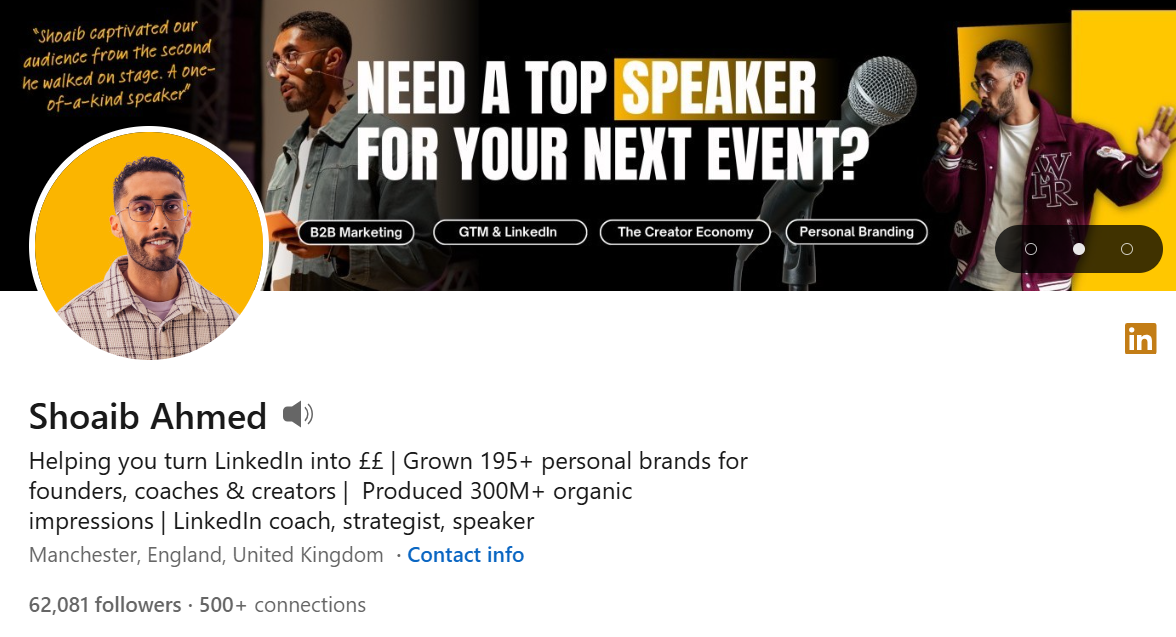
Shoaib Ahmed has built a community of 60,000+ LinkedIn followers by redefining how B2B professionals approach personal branding and content strategy. As founder of Yello Hippo, a personal branding studio for B2B experts, he helps founders, executives, and creators establish industry authority using data-driven copywriting and human psychology. His content has generated millions of organic views, driven by a focus on timeless principles of attention, storytelling, and positioning rather than short-term tactics. By combining AI speed with authentic human narratives, Shoaib has become a trusted voice for B2B marketers navigating LinkedIn’s increasingly crowded landscape.
Florin Tatulea
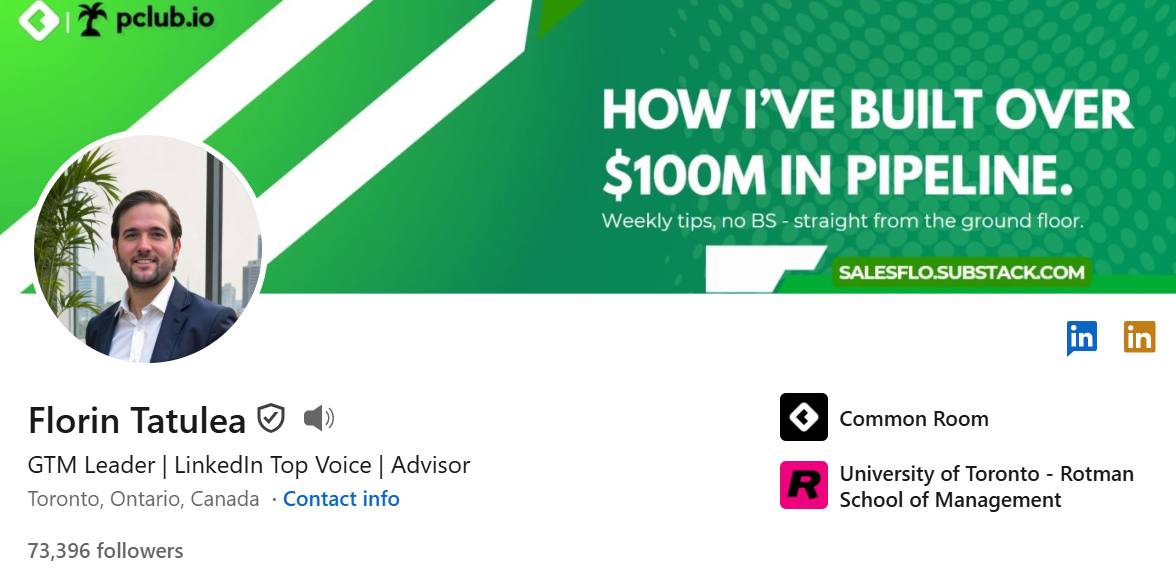
Florin Tatulea is a respected voice in B2B sales and outbound strategy, with 70,000+ LinkedIn followers and 13,000+ Substack subscribers. As founder of Sales Flo and a former sales leader at high-growth SaaS companies like Loopio, Florin advises GTM teams at organisations including HubSpot, Amazon AWS, Shopify, and Zendesk. He shares practical frameworks on cold email copywriting, pipeline generation, and sales development, with a strong emphasis on fundamentals over automation. Recognised as a LinkedIn Top Voice, his content stands out for its tactical clarity and real-world insights drawn from working with 50+ B2B SaaS companies.
Ross Simmonds
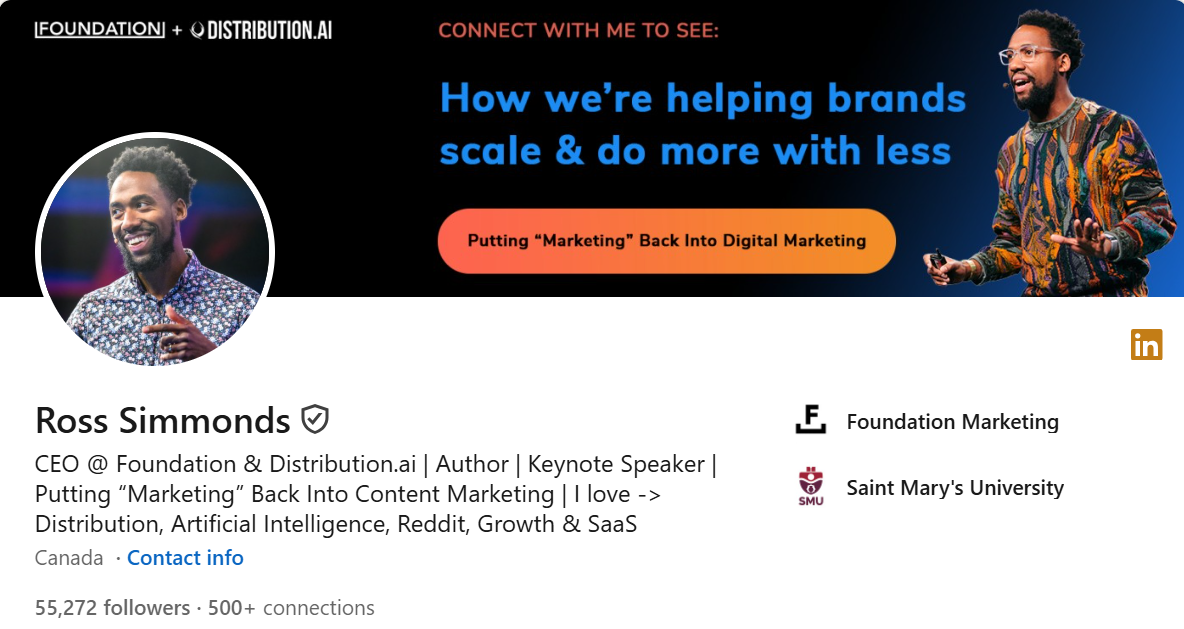
Ross Simmonds demonstrates what effective B2B influence looks like in practice. As founder and CEO of Foundation Marketing, Ross has built an engaged community of over 55,000 marketing professionals on LinkedIn by consistently sharing actionable frameworks on content distribution, B2B growth strategy, and marketing execution.
Dave Gerhardt
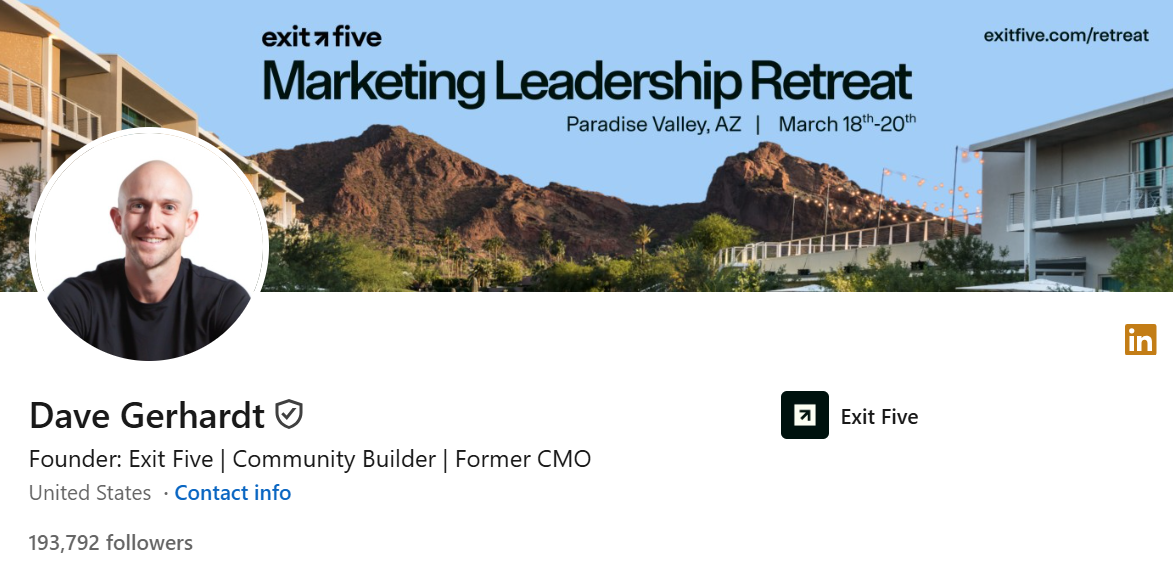
Dave Gerhardt, former CMO at Privy and VP of Marketing at Drift, has over 180,000 LinkedIn followers and founded Exit Five, a thriving community for B2B marketers. He shares authentic, no-BS insights on B2B marketing strategy, career growth, and building marketing teams. His approachable style and practitioner experience make complex marketing concepts accessible.
Rand Fishkin
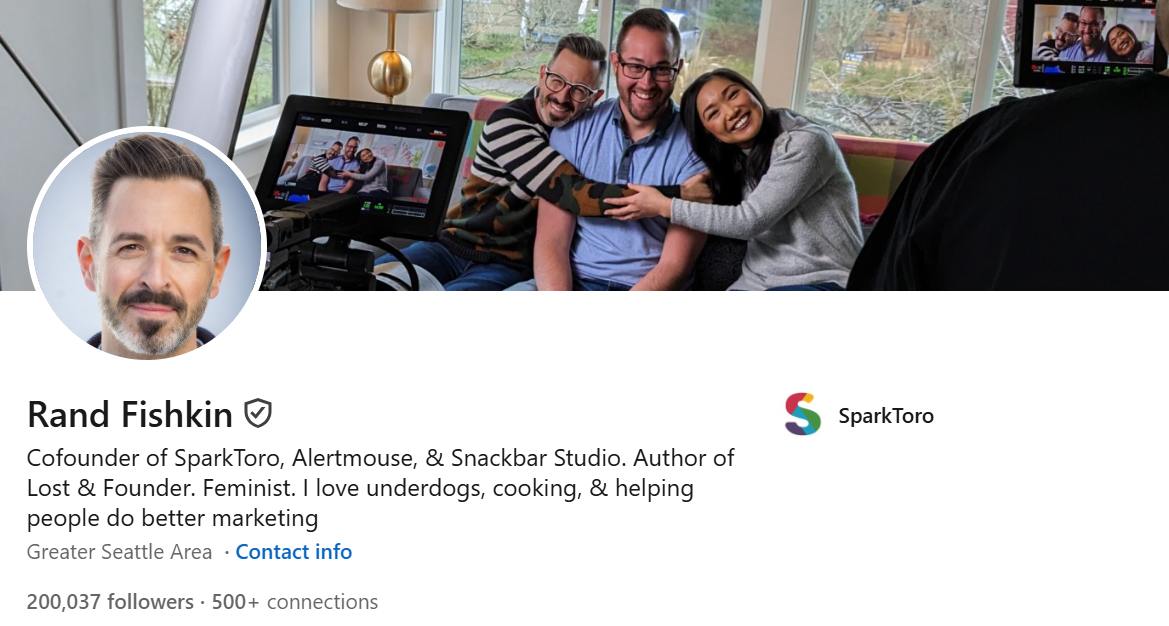
Rand Fishkin is the co-founder of Moz and the CEO of SparkToro, an audience research platform. He has built a large LinkedIn following (around 187K followers) and is known for sharing transparent, data-driven insights on SaaS growth, marketing strategy, fundraising, and entrepreneurship. His “transparent startup” approach and practical guidance make him a trusted voice for B2B tech founders and marketing professionals.
What Sets B2B Influencers Apart
Focus on professional value over lifestyle aspiration
- Share practical solutions to business challenges, not curated personal moments
- Create educational content that decision-makers can apply immediately
- Build credibility through demonstrated expertise, not aesthetic appeal
Operate within specific domains
- Deep specialisation in areas like SaaS marketing, cybersecurity, supply chain, HR tech, or financial operations
- Audiences consist of professionals facing the same challenges they've solved
- Authority comes from years of hands-on experience, not broad mass appeal
Influence complex, committee-based decisions
- Impact enterprise purchases involving multiple stakeholders and lengthy evaluation cycles
- Provide the third-party validation that buying committees need to justify vendor selection
- Shape industry conversations that determine which solutions get shortlisted
How to find and vet business influencers
Finding the right creators requires looking beyond follower counts. A creator with 5,000 followers who speaks directly to your ICP delivers more value than a generalist with 500,000 followers outside your target market. For a deeper walkthrough of the sourcing process, see our guide on how to find the right B2B influencer for your brand.
Key vetting criteria include:
- Audience composition: Do their followers match your target job titles, industries, and company sizes?
- Content relevance: Does their content address topics your buyers care about?
- Engagement quality: Are comments from real professionals or generic responses?
- Brand safety: Does their content history align with your brand values?
- Creator professionalism: Do they meet deadlines and communicate clearly?
Flooencer’s Discovery Tool
Our agency has an in-built discovery platform to simplify the process when we collaborate with brands, connecting you with business influencers who can meaningfully amplify your message and drive pipeline growth.
- Create an Account & Start Your Campaign
Sign up on Flooencer and fill in your campaign goals, target audience, and ideal customer profile (ICP). This helps the platform tailor creator recommendations to your specific needs. - Explore Pre‑Vetted Business Influencers
Flooencer maintains a curated roster of B2B content creators, industry experts, and thought leaders. You can browse and select influencers whose expertise aligns with your niche, messaging, and target market. - Refine Your Search Criteria
While Flooencer handles sourcing and vetting, you can guide the process by specifying key filters such as
- Industry focus: (e.g., SaaS, AI, tech leadership)
- Audience type: (roles, company size, geography)
- Content style and platform preferences: These preferences help ensure influencer matches that resonate with your ICP.
- Industry focus: (e.g., SaaS, AI, tech leadership)
- Review Matches & Approve Creators
Flooencer will present you with influencers and creator suggestions. Review profiles, metrics, and audience fit before approving the ones you want to work with.
Launch and Optimise Campaigns
Once influencers are approved, Flooencer manages outreach, contracts, posting schedules, and compliance. You can focus on approving content and tracking performance while they handle the heavy lifting.
How to Create a B2B Influencer Marketing Strategy
Follow these 7 steps to build campaigns that drive pipeline, not just impressions.
1. Define goals and KPIs
Set specific, measurable outcomes first (e.g., 15% account penetration vs. 2M impressions). Pipeline influence requires different metrics than awareness.
See our full guide on ‘Business Influencer Marketing KPIs’
2. Map your buying committee
List roles influencing decisions (CISO, CFO, VP Procurement). Match creators to each persona for full coverage.
3. Source ICP-aligned creators
Prioritise audience overlap over follower count. Use LinkedIn analytics or agency networks for precise targeting.
4. Structure compensation
Offer flat fees ($3-15k/post), usage rights ($2k extra), and pipeline bonuses. Include FTC/GDPR disclosure requirements. Our complete guide to B2B influencer campaign costs breaks down typical rates by creator tier.
5. Create focused briefs
Share 3 key messages and boundaries only. Preserve creator authenticity; no scripts.
6. Manage partnerships professionally
Use shared calendars for content review, automated payments, and weekly check-ins. Build for repeat collaborations.
7. Measure and iterate
Track engagement by job title, CRM entry rates, and sales mentions. Share results transparently to strengthen relationships.
How to measure business influencer marketing performance
Engagement and reach metrics
Track impressions, engagement rate, saves, shares, and click-throughs. Engagement metrics indicate content resonance, though they don't tell the full story of business impact.
Pipeline influence and account penetration
Cross-reference creator audiences with target account lists. Track whether influenced accounts enter the pipeline or accelerate through stages.
Brand lift studies
Survey-based measurement tracks shifts in awareness, consideration, and preference among target audiences. Brand lift studies capture the impact that click-tracking misses.
Tracking dark social and qualitative signals
Monitor sales call mentions, inbound message references, and direct feedback. Much B2B influence happens in channels that resist direct tracking. Asking new leads, "How did you hear about us?" during intake often reveals influencer touchpoints that attribution software missed.
Common B2B Influencer Marketing Pitfalls
- Prioritising follower count over ICP alignment
Large generic audiences deliver zero pipeline value. Vet for 70%+ job title/industry match using LinkedIn analytics. - Executing one-off posts instead of sustained partnerships
Enterprise trust compounds over 6+ months. Single activations generate 4x lower engagement than ongoing relationships. - Over-editing creator content
Audiences detect inauthenticity instantly. Creators lose 60% engagement when brand voice overshadows their expertise. Use briefs with 3 key messages only. - Measuring same-day conversions
B2B sales cycles average 9 months. Track account penetration and sales cycle acceleration, not immediate purchases. - Neglecting FTC/GDPR disclosure compliance
73% of consumers abandon brands after undisclosed sponsorships. Require #ad disclosures in the first 3 seconds of video and the first sentence of text. - Tracking vanity metrics exclusively
Likes generate zero revenue. Monitor CRM entry rates, sales-qualified leads from influenced accounts, and buying committee mentions.
When to work with a business influencer marketing agency
Running multi-creator campaigns requires significant operational capacity. Contracts, compliance, creator management, and performance tracking add complexity quickly.
Agency partnership makes sense when:
- Internal bandwidth is limited
- B2B specialisation is needed (consumer influencer experience doesn't translate)
- Established creator relationships would accelerate sourcing
- Compliance management creates legal complexity
Agencies like Flooencer specialise in B2B influencer marketing with managed service support, handling everything from custom creator sourcing to campaign execution and transparent reporting.
Building long-term influence with business creators
The most effective B2B influencer marketing programs aren't campaigns. They're ongoing relationships where creators become genuine advocates over time. This requires patience, fair compensation, and treating creators as partners rather than distribution channels.
When a creator mentions your brand repeatedly over months, their audience notices. That sustained presence builds the kind of credibility that one-off sponsorships cannot achieve.
For brands ready to build creator partnerships, book a call to discuss your business influencer marketing campaign.
Commonly asked questions from this article
Most B2B influencer campaigns require three to six months of sustained activity before measurable pipeline impact appears. Brand awareness builds faster, but influence on buying decisions follows enterprise sales cycle timelines.
Yes. Technical products often benefit most because buyers rely heavily on peer expertise for complex purchase decisions. The key is finding creators who genuinely understand the technical domain.
Executive thought leadership features internal leaders as the voice. Business influencer marketing partners with external creators who have independent audiences. Both build credibility, but influencer marketing accesses audiences you don't already own.
Frame influencer marketing as a channel for reaching buyers who ignore traditional advertising. Tie metrics to pipeline influence rather than vanity numbers. Start with a pilot program to demonstrate results before requesting a larger investment.
Read more

26 Feb 2026
14 Types of Business Influencers Transforming Brand Marketing
Explore 14 types of business influencers and how each one impacts brand marketing, reach, and engagement.
26 Feb 2026
Business Influencer Marketing KPIs: A Complete Guide
Key influencer marketing KPIs to measure performance, ROI, and business impact.

26 Feb 2026
Top Celebrity Business Influencers to Follow in 2026
Meet the top business influencers of 2026 shaping trends and strategies you need to know.